Formal shoes for women can make a big difference to your overall appearance. The right pair should not only complement your office outfit but also feel comfortable during long working hours. From classic flats and loafers to elegant heels and lace-up styles, there are many options available for different workplaces, outfits, and personal preferences.
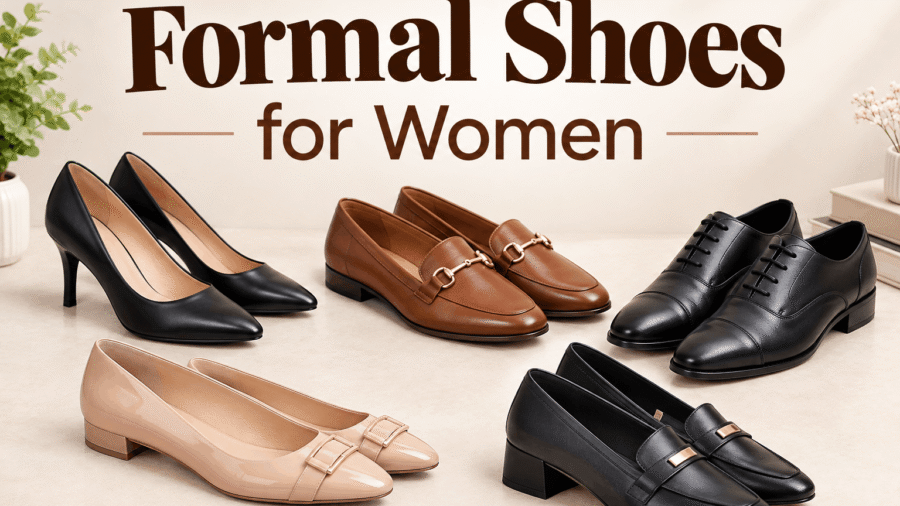
Formal footwear has also become more versatile. Today, women can choose from traditional designs as well as modern styles that combine professional details with everyday comfort. Common options include pumps, loafers, flats, Oxfords, Derbies, and block heels. Choosing the right formal shoes for women can help create a polished and professional appearance while keeping your footwear practical for daily use.
Whether you are preparing for a job interview, attending a business meeting, or simply looking for shoes for your everyday office wardrobe, understanding the different styles can help you make a practical choice. With so many designs available, finding formal shoes for women that suit your workplace, outfit, and personal preferences is easier than ever.
What Are the Different Types of Formal Shoes for Women?
There is no single style that works for every woman or every workplace. The right choice depends on your office dress code, outfit, comfort needs, and the amount of walking you do during the day.
- Formal Flats
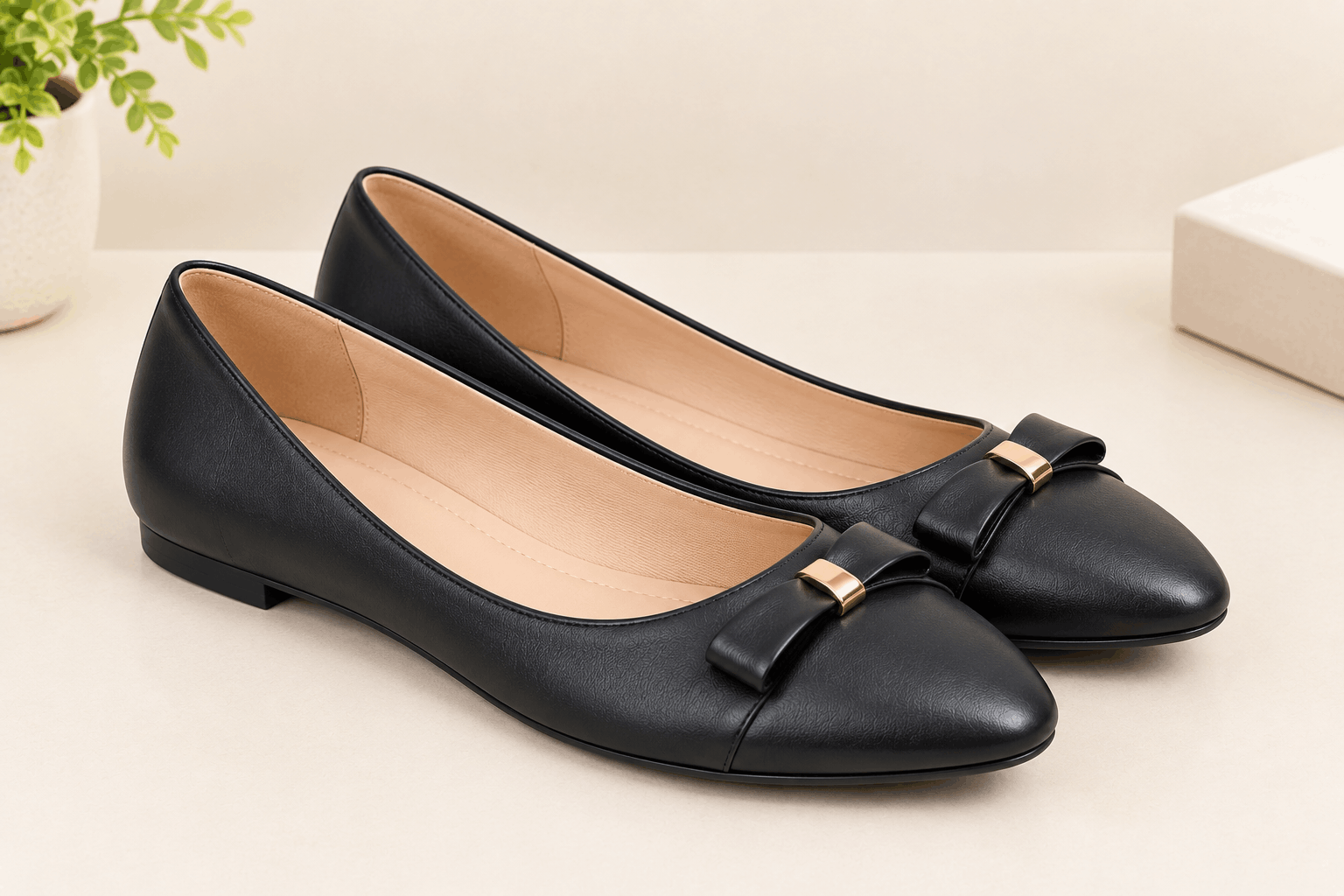
Formal flats are a useful option for women who prefer footwear without heels. They can provide a neat appearance while making walking and commuting easier.
Pointed-toe flats can look polished with trousers, straight skirts, dresses, and formal Indian outfits. For everyday office use, choose a pair with a simple design and a cushioned footbed.
- Pumps
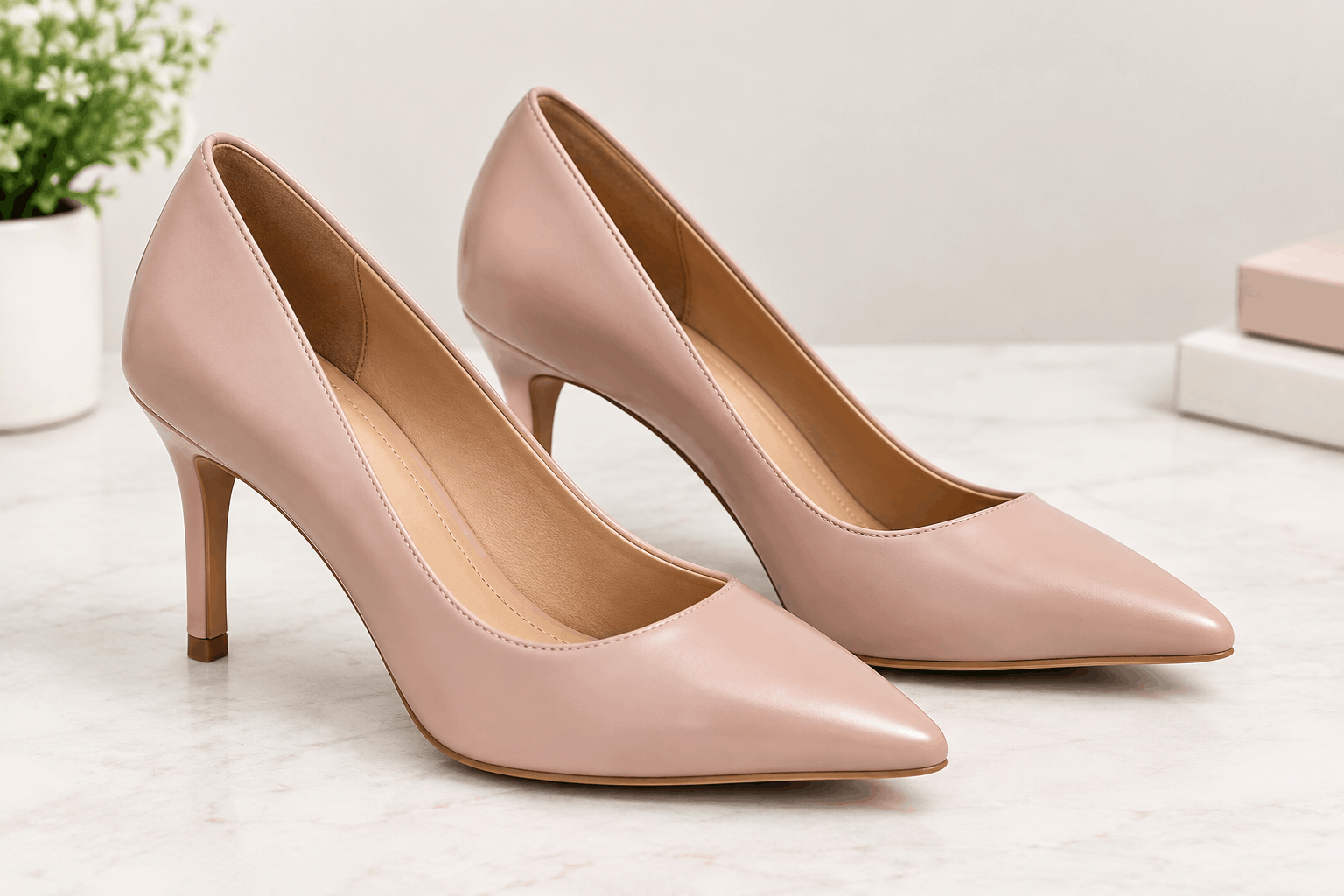
Pumps are a classic choice for professional dressing. They can add a refined touch to trousers, pencil skirts, dresses, and tailored suits.
If you are not used to wearing high heels, consider low or medium heels. A stable heel can be easier to manage during a full workday than a very high heel.
- Loafers
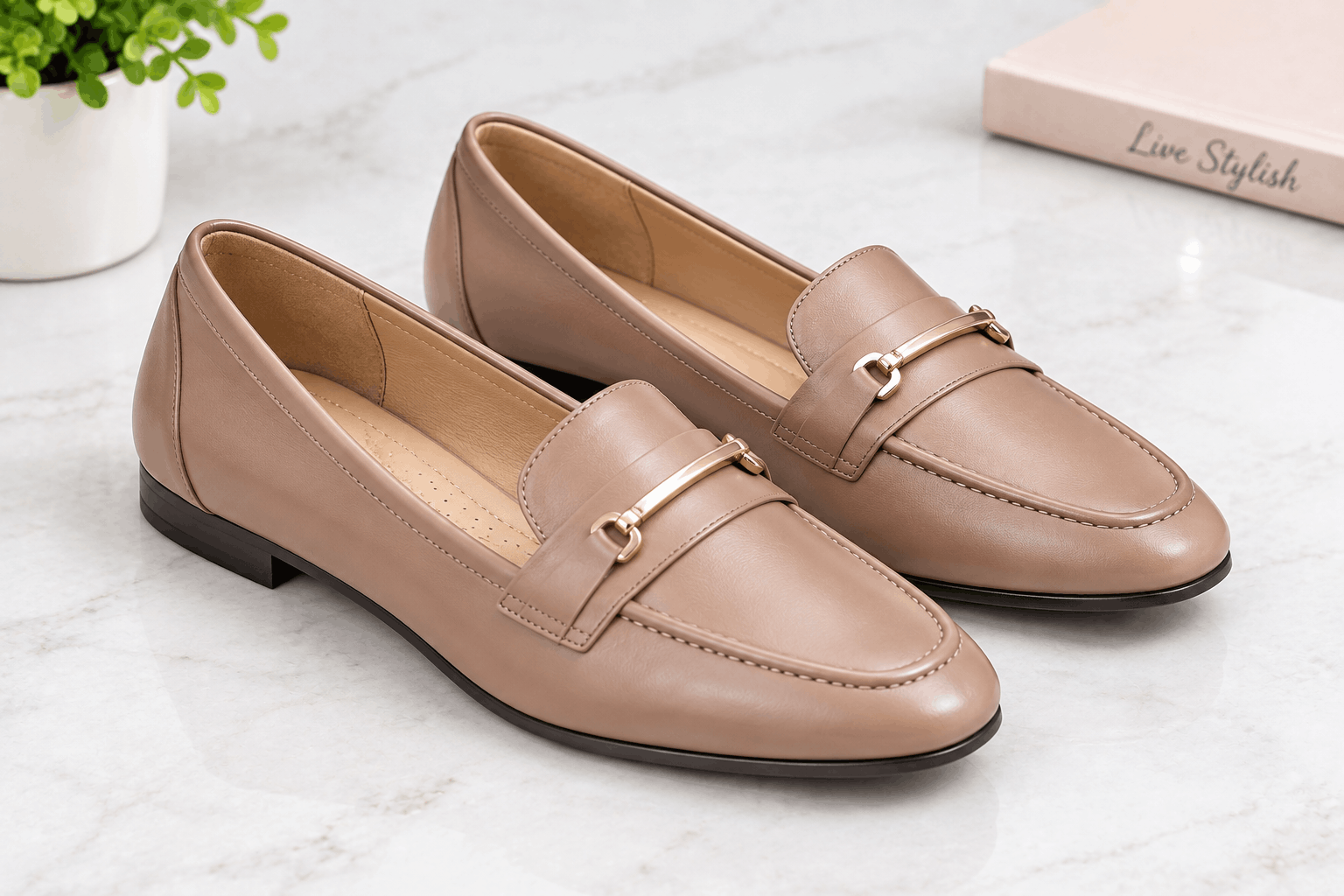
Loafers are popular because they combine a structured appearance with the convenience of a slip-on design. They can work particularly well with trousers, ankle-length pants, midi skirts, and dresses.
Current footwear guides also highlight loafers as a practical workwear option because they can offer a polished appearance without requiring a traditional heel.
- Oxford Shoes
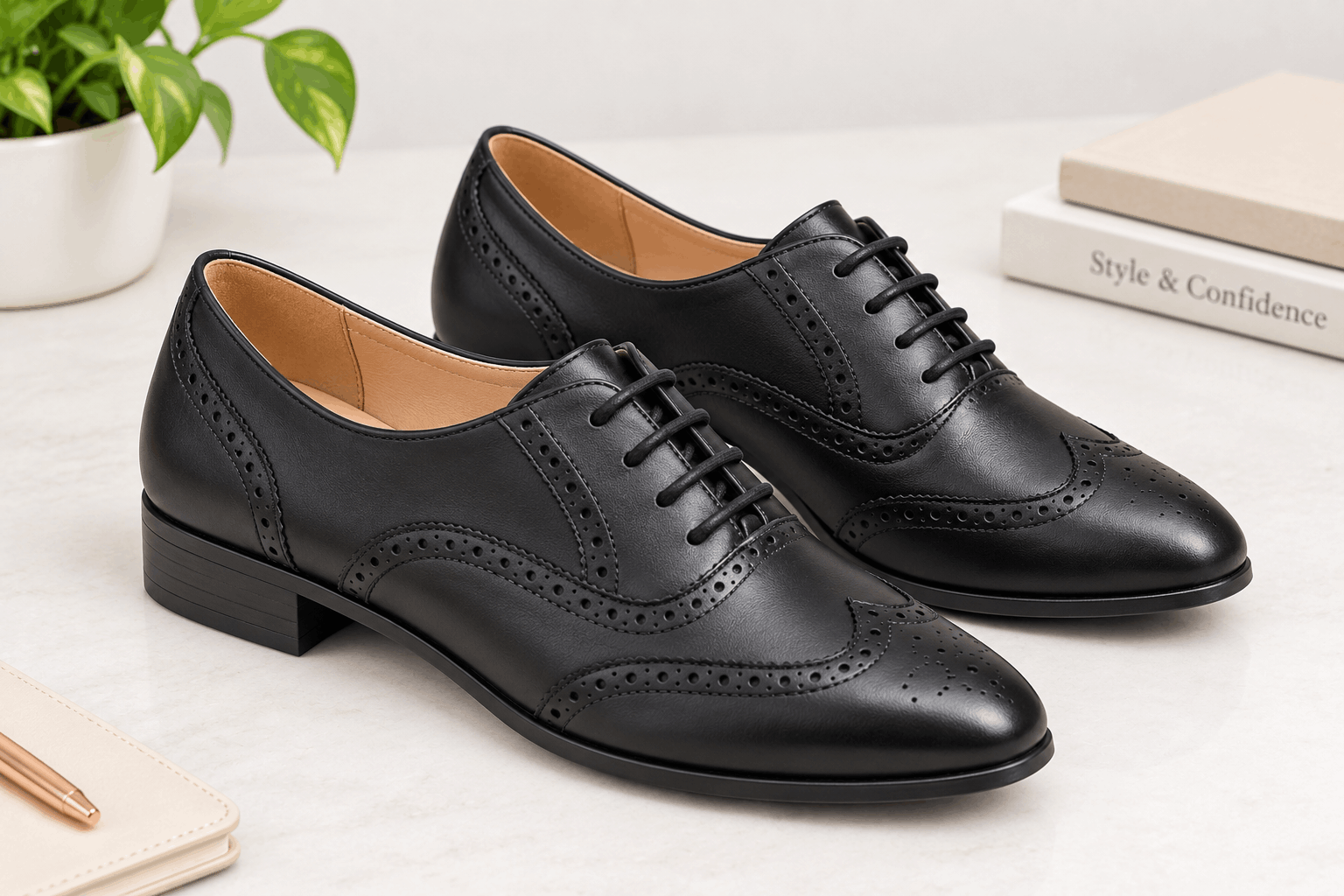
Oxford formal shoes for women are inspired by classic lace-up footwear and are recognised by their closed-lacing construction. They can create a smart and structured appearance when paired with tailored trousers or formal dresses.
They are particularly suitable if you prefer a slightly more classic or menswear-inspired office style.
- Block Heels
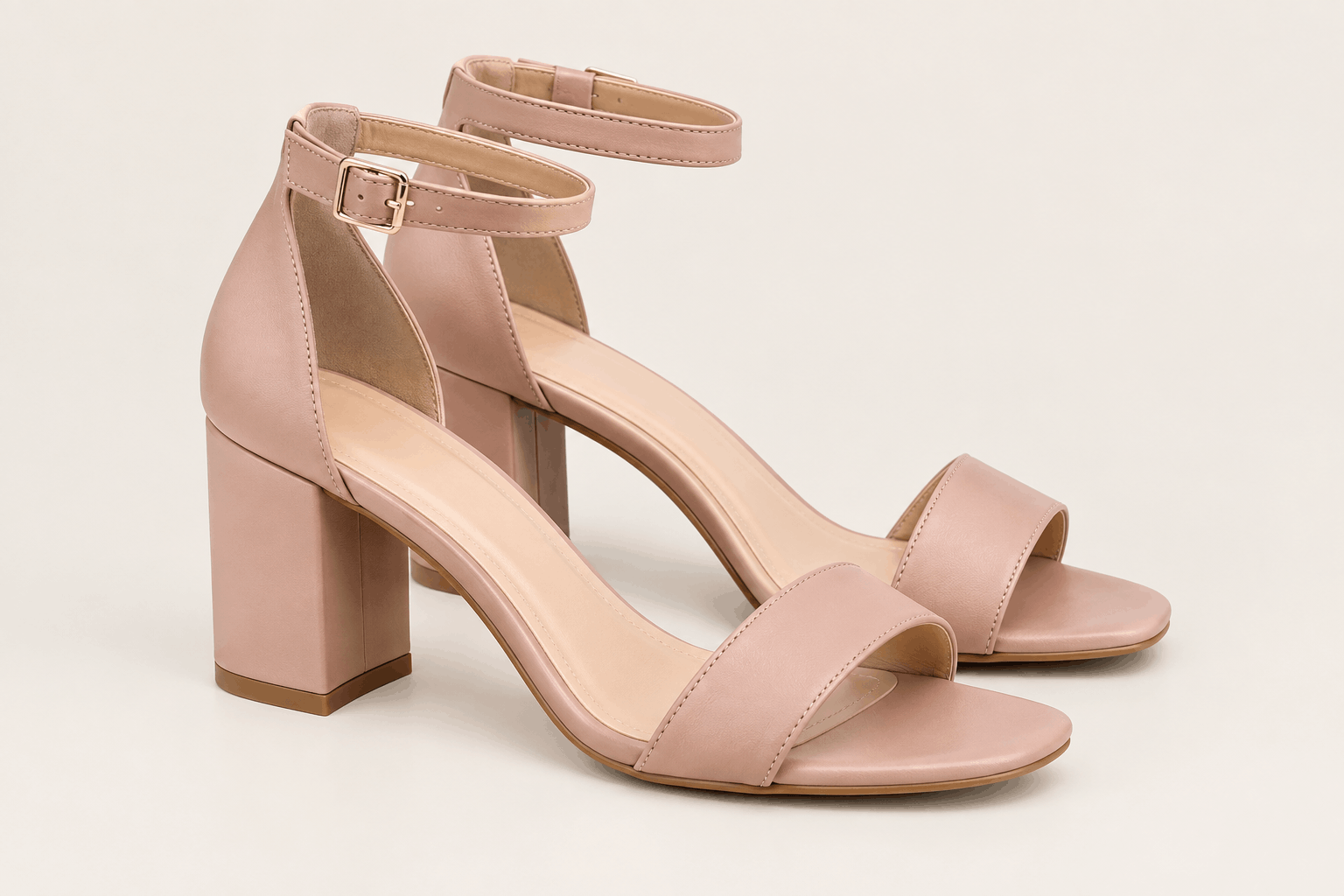
Block heels are another useful choice for professional wardrobes. Their wider heel can provide more stability than a narrow heel, making them suitable for women who want some extra height without choosing a very thin heel.
They can be paired with trousers, skirts, dresses, and formal suits.
How to Choose the Right Formal Shoes for Women?
Choosing the right formal shoes for women should involve more than looking at the colour or design. A shoe may look attractive in a store but still become uncomfortable after several hours. Consider your workplace, fit, comfort, and heel height before making your choice.
Consider Your Workplace
First, think about your office environment. A corporate workplace may require more traditional footwear, while a creative workplace may allow greater freedom with colours, textures, and designs.
For conservative environments, simple closed shoes, flats, loafers, and low heels can work well. If your workplace has a relaxed dress code, you may have more flexibility with modern shapes and subtle decorative details. Choosing suitable formal shoes for women can help you maintain a polished appearance while matching your workplace requirements.
Focus on the Fit
Fit is one of the most important factors when buying footwear. Your toes should have enough room to move, while your heel should remain secure without excessive slipping.
Try shoes while standing and walking rather than judging them only while sitting. If you normally wear socks or stockings with your office shoes, consider them when checking the fit.
Look for Comfortable Construction
If you spend most of the day walking, standing, or commuting, comfort should be a priority.
Look for features such as:
- Cushioned insoles
- Flexible soles
- Adequate toe room
- Stable heels
- Soft inner lining
- Secure fastening
- Breathable materials
The goal is to find formal shoes for women that can support your normal daily routine rather than simply looking formal.
Choose the Right Heel Height
Heel height is largely a matter of personal preference and comfort. Low heels can be suitable for everyday office use, while medium heels may work well for meetings and formal events.
If you are new to heels, start with a lower and wider heel. This can make walking easier and provide a more stable base.
Which Colours Work Best for Office Wear?
Colour can change the appearance of your entire outfit. Neutral shades are generally easier to combine with different office clothes.
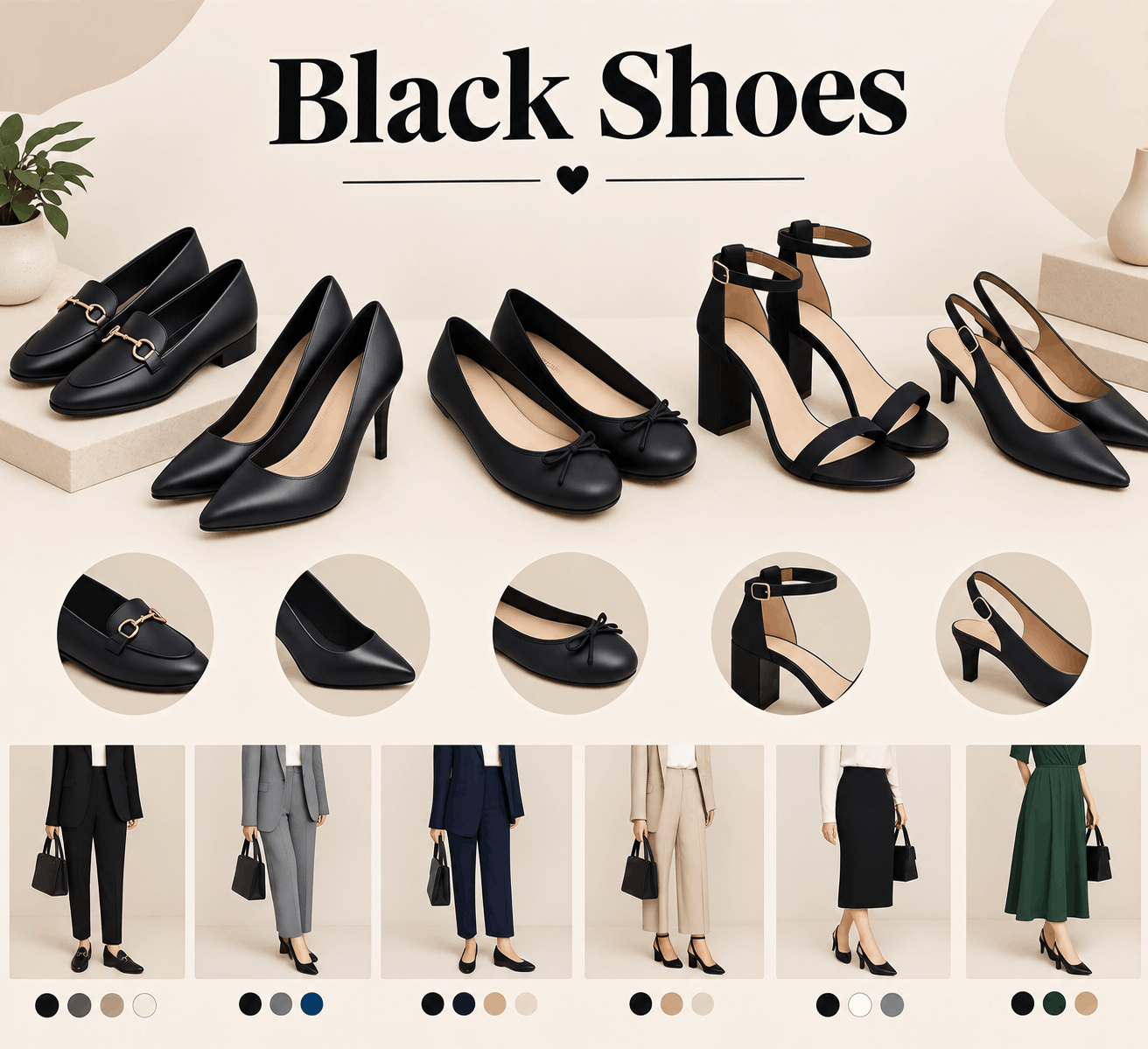
Black Shoes
Black formal shoes for women are a classic choice because black can be paired with many colours and outfit styles. They can work with black, grey, navy, beige, white, and many other shades.
Black footwear is especially useful if you want one pair that can be worn regularly with different office outfits.
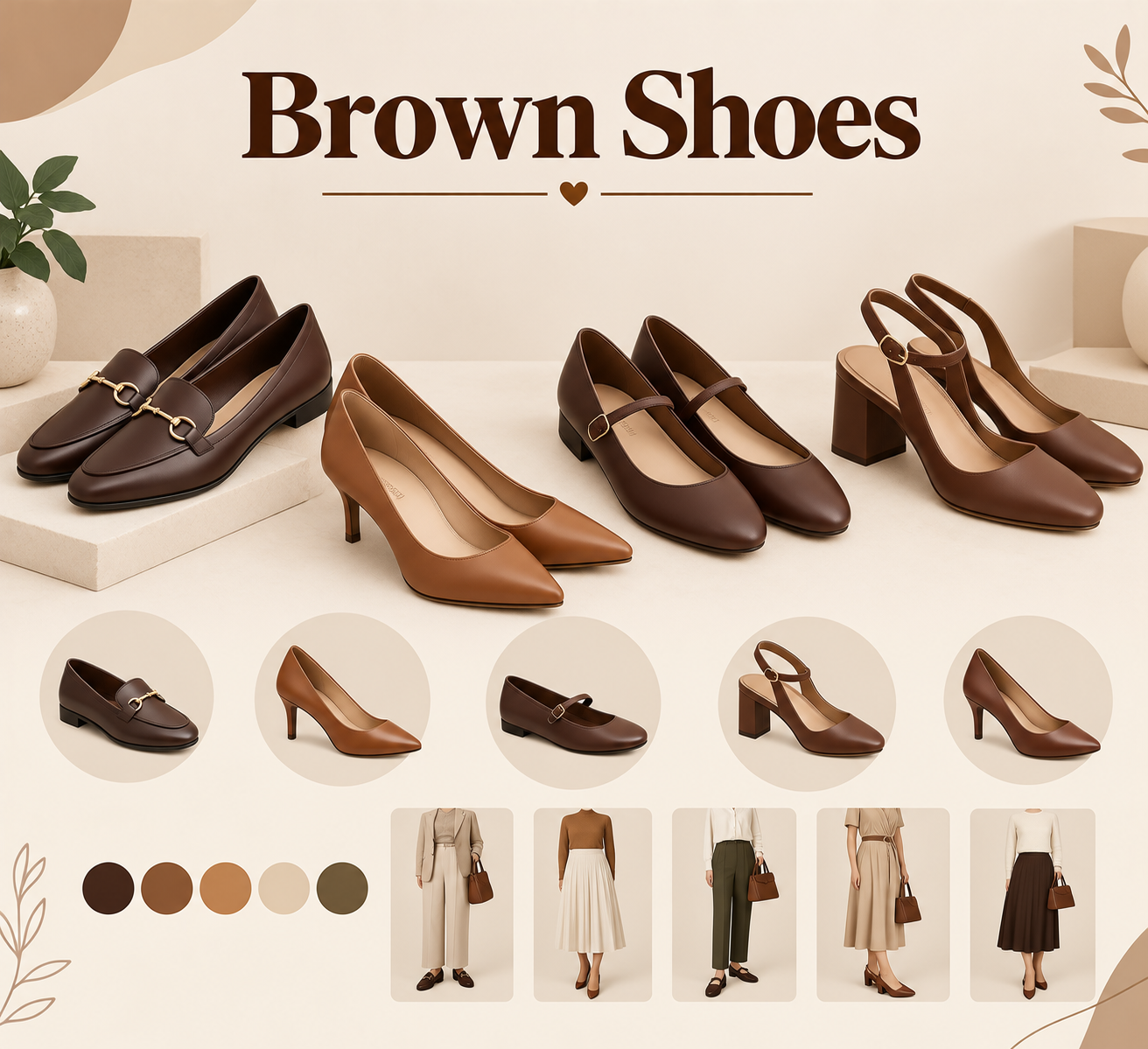
Brown Shoes
Brown formal shoes for women can add warmth to an outfit. Lighter brown shades can work particularly well with beige, cream, tan, and earthy colours, while darker brown can create a more traditional appearance.
Brown can also be useful when black feels too strong against a lighter outfit.
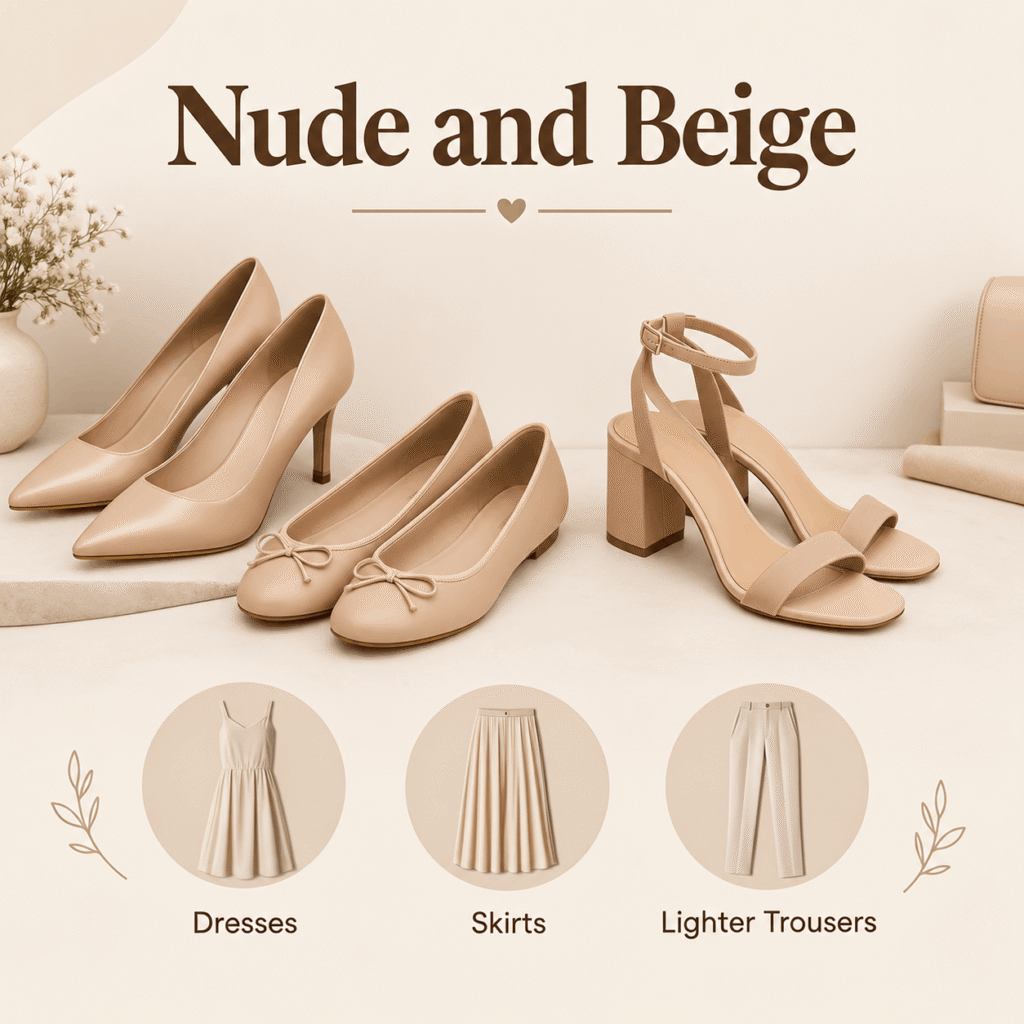
Nude and Beige
Nude and beige footwear can create a subtle appearance and work well with dresses, skirts, and lighter trousers. They can also be useful when you want your shoes to blend naturally with your outfit.
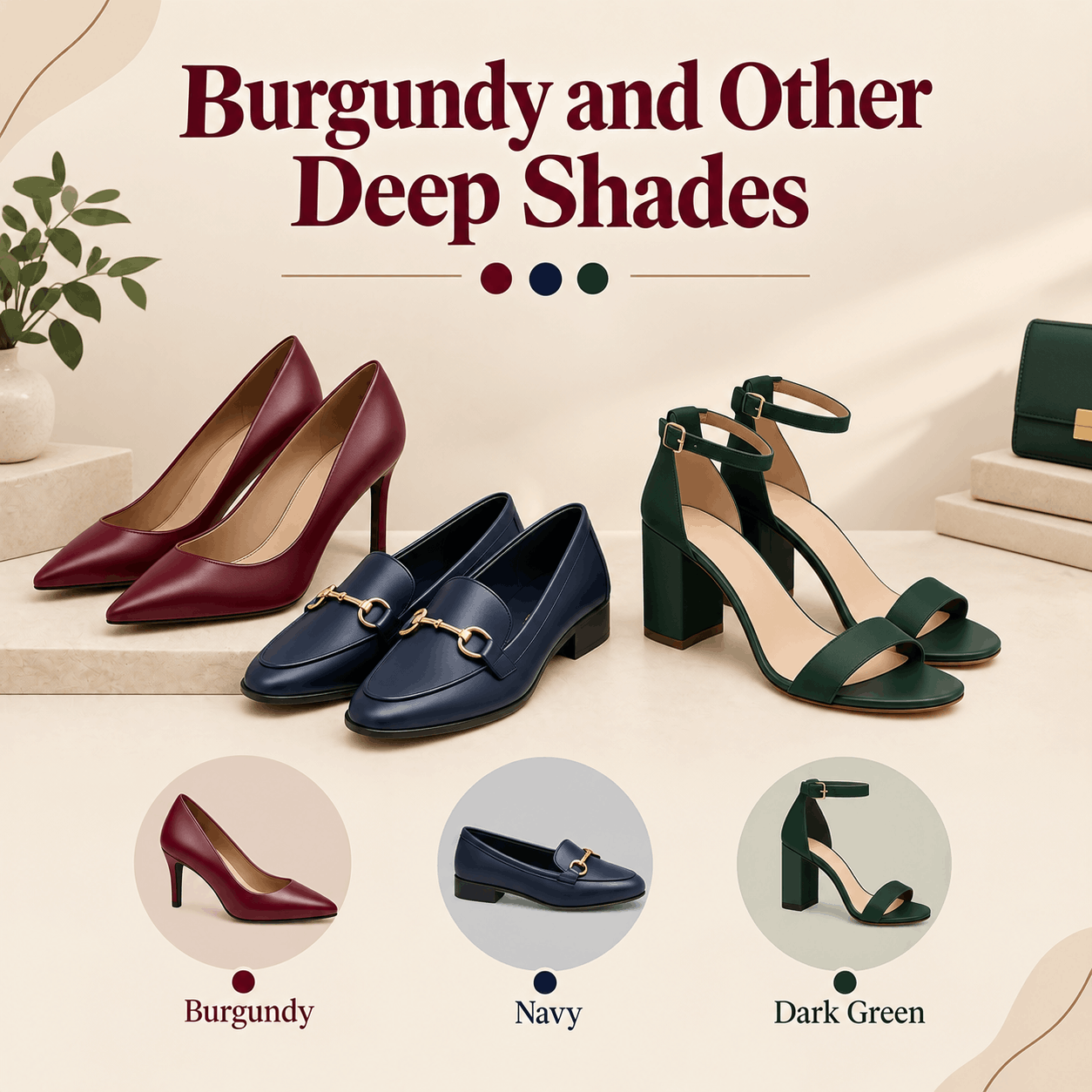
Burgundy and Other Deep Shades
If your workplace allows more colour, deep shades such as burgundy, navy, or dark green can add personality without looking overly casual.
The key is to keep the overall shoe design simple and professional.
Are Leather Shoes a Good Choice for Formal Wear?
Material can influence both appearance and durability. Leather has traditionally been associated with formal footwear because it can offer a clean and polished finish.
Formal leather shoes for women can work well for office environments, meetings, presentations, and other occasions where a refined appearance is expected.
When choosing leather footwear, pay attention to the construction and finish. Genuine leather, synthetic leather, and other materials have different care requirements, so check the product information before purchasing.
Regular cleaning can also help maintain the appearance of your shoes. Use care products appropriate for the specific material rather than applying the same product to every type of footwear.
How to Style Formal Shoes with Office Outfits?
The right combination can make your formal shoes for women look more natural with your clothes.
With Trousers
Straight-leg or tailored trousers work well with loafers, flats, Oxfords, and low heels. A clean silhouette keeps the outfit professional.
For a traditional office look, pair neutral trousers with a simple shirt, blazer, and structured shoes.
With Dresses
Formal dresses can be paired with pumps, flats, or elegant loafers. If the dress has a simple design, shoes with subtle detailing can add interest.
For a more formal meeting, a closed-toe pump can create a polished appearance.
With Skirts
Pencil skirts and A-line skirts can work well with flats, pumps, and low block heels. Keep the footwear proportional to the outfit.
If your skirt is detailed or patterned, a simple shoe can help maintain balance.
With Indian Office Wear
Formal footwear can also be worn with kurtas, straight pants, palazzos, and other professional Indian outfits. Formal shoes for women such as simple loafers, flats, and low heels can create a comfortable combination for women who prefer Indian-inspired office clothing.
Are Loafers Suitable for Formal Office Wear?
Yes, loafers can be suitable for many office environments, particularly when the design is clean and structured.
Loafer formal shoes for women can be worn with trousers, skirts, dresses, and tailored outfits. Plain black, brown, tan, or other neutral designs are generally easier to coordinate with workwear.
If your office has a strict dress code, choose a sleek loafer with minimal decoration. For a more relaxed environment, you can experiment with subtle hardware, textures, or different sole designs.
Loafers have also become a significant part of contemporary office footwear, with current style coverage highlighting both classic and modern variations.
What Are Formal Belly Shoes?
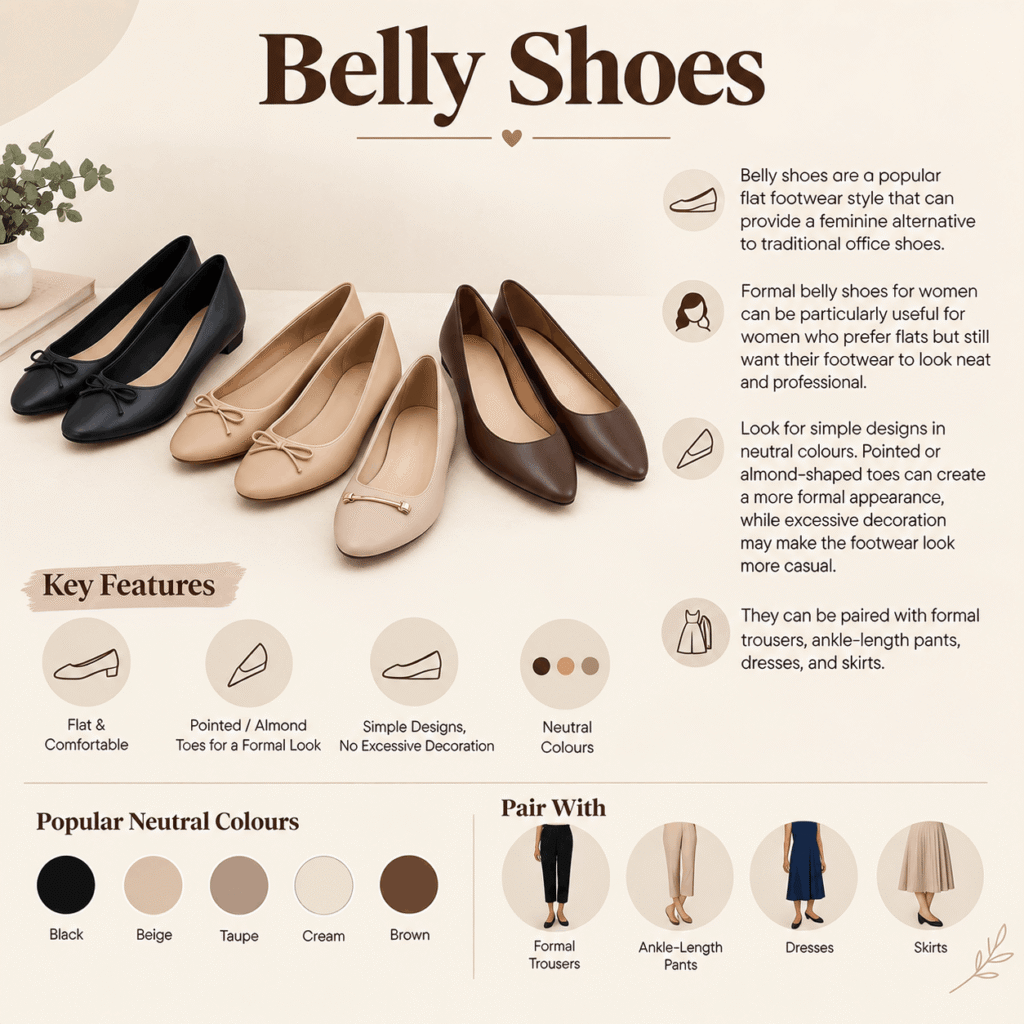
Belly shoes are a popular flat footwear style that can provide a feminine alternative to traditional office shoes.
Formal belly shoes for women can be particularly useful for women who prefer flats but still want their footwear to look neat and professional.
Look for simple designs in neutral colours. Pointed or almond-shaped toes can create a more formal appearance, while excessive decoration may make the footwear look more casual.
They can be paired with formal trousers, ankle-length pants, dresses, and skirts.
What About Mochi Formal Shoes for Women?
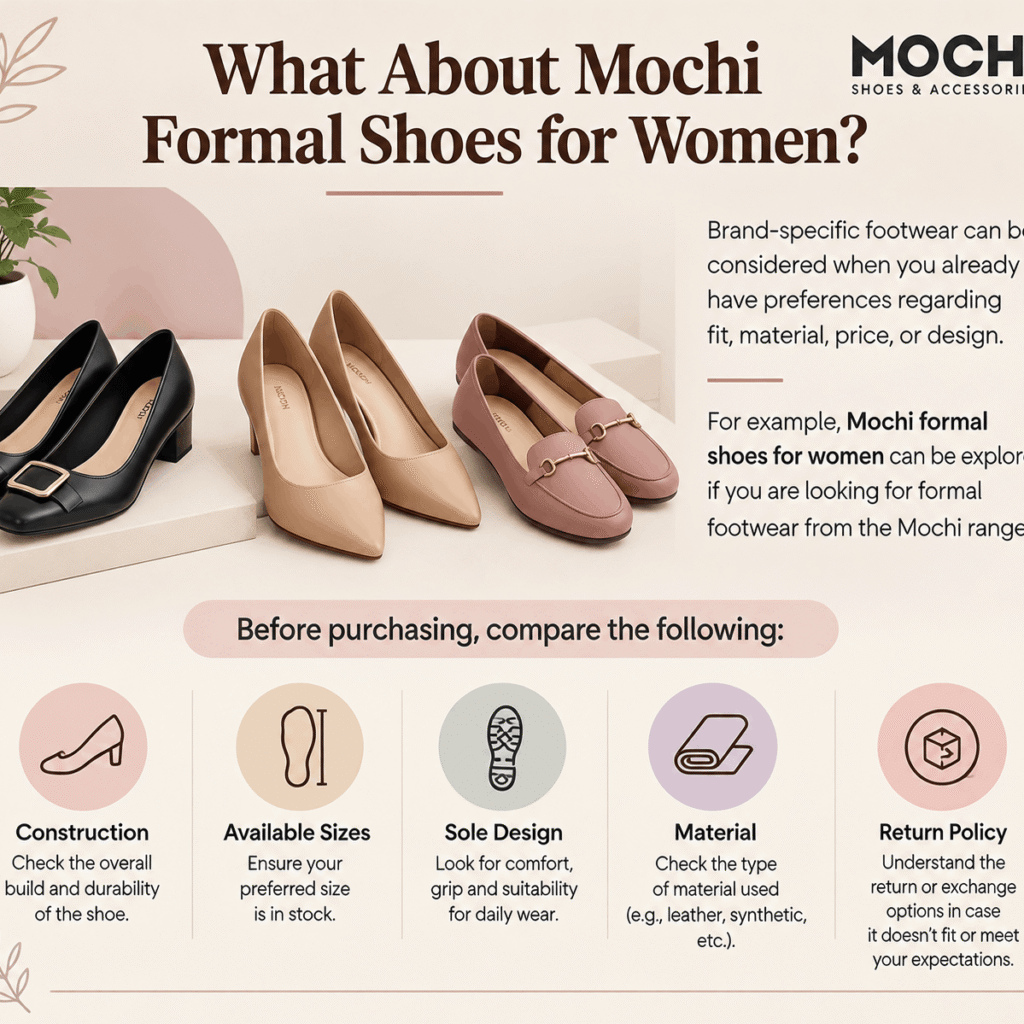
Brand-specific footwear can be considered when you already have preferences regarding fit, material, price, or design.
For example, mochi formal shoes for women can be explored if you are looking for formal footwear from the Mochi range. Before purchasing, compare the construction, available sizes, sole design, material, and return policy rather than choosing a shoe based only on its appearance.
How Can You Make Formal Shoes More Comfortable?
Even well-designed formal shoes for women may require some adjustment before they become comfortable. Gradually getting used to new footwear can help you identify fit or friction issues before wearing them for a full working day.
Here are some simple tips:
- Wear them at home first: Use new shoes for short periods before wearing them for a full working day.
- Check the size carefully: Avoid buying a smaller size hoping the shoe will stretch significantly.
- Use suitable insoles: Cushioned insoles can improve comfort when the shoe design allows enough room.
- Keep your feet dry: Breathable socks or suitable foot liners can help reduce moisture.
- Rotate your footwear: Wearing different pairs on different days can reduce repeated pressure on the same areas.
- Check for rubbing: If a particular area repeatedly causes friction, consider a suitable protective pad or a different shoe shape.
Current footwear guidance also recommends gradually breaking in formal shoes for women and considering cushioning or protective solutions where appropriate.
How Many Formal Shoes Should a Woman Own?
You do not need a large collection to create a useful office wardrobe. A few versatile pairs can cover many situations.
A practical collection could include:
- One black pair for everyday formal outfits
- One brown or tan pair for lighter clothing
- One comfortable flat or loafer
- One dressier pair for presentations and formal occasions
The exact number depends on your workplace, wardrobe, lifestyle, and how frequently you wear formal clothing.
Instead of buying several similar pairs, choose styles that serve different purposes.
How to Care for Your Formal Shoes?
Good care can help maintain the appearance of footwear.
Keep shoes away from excessive moisture and allow them to dry naturally if they become wet. Avoid placing them directly near strong heat sources.
Clean the shoes according to their material. Leather, suede, synthetic materials, and fabric can require different care methods.
Store them in a dry, clean area and avoid placing heavy items on top of them. Using shoe trees or suitable stuffing can also help some shoe styles retain their shape.
Common Mistakes to Avoid When Buying Formal Shoes
Choosing formal shoes for women only for appearance can lead to discomfort. Always check the fit, material, sole, and heel stability before buying formal shoes for women. Avoid choosing the wrong size, as tight footwear may remain uncomfortable even after stretching.
When selecting formal shoes for women, consider your workplace dress code and daily routine. Very high heels may not be practical if you walk or stand for long hours.
Regular maintenance is also important. Replace formal shoes for women when you notice worn soles, damaged heels, cracked material, loose stitching, or reduced support.
Final Thoughts
The right formal shoes for women should combine professional style, comfort, fit, and versatility. Instead of choosing a pair only because it looks attractive, consider how often you will wear it, how long you will be on your feet, and which outfits you already own.
Black and brown footwear can form a practical foundation, while loafers, flats, Oxfords, pumps, and block heels provide different styling options. For everyday office use, comfort should remain an important part of the decision.
Ultimately, the best formal shoe is one that fits properly, suits your workplace, complements your wardrobe, and allows you to move comfortably throughout your day.
Frequently Asked Questions
1. What are the best formal shoes for women?
The right choice depends on your workplace and personal preferences. Loafers, flats, pumps, Oxfords, and block heels are common options for professional outfits.
2. Are loafers suitable for office wear?
Yes. Sleek loafers can work well for many office environments. Choose simple designs and neutral colours when your workplace has a formal dress code.
3. Are black shoes good for office wear?
Yes. Black is a versatile colour that can coordinate with many professional outfits, including trousers, skirts, dresses, and suits.
4. Are brown shoes suitable for formal outfits?
Yes. Brown shoes can work well with neutral, beige, tan, cream, navy, and other office-friendly colours.
5. What type of formal shoes are comfortable for long working hours?
Yes. Brown shoes can work well with neutral, beige, tan, cream, navy, and other office-friendly colours.
6. Are Oxfords formal shoes for women?
Yes. Oxfords are lace-up shoes with a closed-lacing construction and can create a structured, classic appearance suitable for many formal outfits.
7. Can women wear flats with formal clothes?
Yes. Simple flats can be paired with trousers, dresses, skirts, and other professional outfits. They are particularly useful for women who prefer formal shoes for women without heels.
8. How should formal shoes fit?
Your toes should have enough room to move, and your heel should stay secure without excessive slipping. Try walking in the shoes before deciding on the size.